Councils, schools, NHS bodies, government departments and their suppliers get rid of a lot of IT: laptops at the end of a refresh, servers from a closed data centre, phones from a contract change. Most of it holds personal or official data, so the questions are the same each time. How do we make sure the data is gone? What evidence do we need? Which buying routes can we use?
This article explains the main official guidance that public sector IT disposal is measured against. It is a starting point, not a substitute for your own security and information governance teams.
The data rules are the same as everyone else's, with more scrutiny
There is no separate data protection law for public bodies when they dispose of IT. UK GDPR applies, and the Information Commissioner's Office (ICO) expects the same controls from any organisation. Its audit toolkit on disposal and deletion links poor destruction of electronic records to UK GDPR Articles 5(1)(f) and 32 (security), and the need for evidence to Article 5(2) (accountability).
For equipment and hardware, the ICO's expectations include:
- electronic records are destroyed "using appropriate methods that prevent disclosure before, during, and after disposal"
- the methods are used and documented, for example "device wiping, degaussing, or hardware shredding"
- devices awaiting destruction are stored securely, in a locked area with restricted access
- there is a log of all devices awaiting destruction and where they are
If you use an outside company, the ICO expects "appropriate contracts" with every third party that disposes of personal information. Those contracts should cover security measures, accountability and your right to audit the provider. You should also get evidence of secure disposal back. The toolkit suggests that a named member of staff should check destruction certificates against what you actually sent. A certificate that doesn't match your asset list proves very little.
Our guide to data protection when you dispose of IT covers this in more detail.
NCSC guidance: the technical benchmark
For the technical side, most public sector buyers start from the National Cyber Security Centre's guidance on secure sanitisation and disposal of storage media. It is written for organisations that need data to stay unreadable once the media leaves their control. It applies whenever a device is reused, sold, donated, returned for repair or thrown away.
Its key points:
- Deleting files is not enough. In the NCSC's words, "simply hitting the 'Delete' key isn't enough".
- Overwriting all user-accessible storage with a fixed value can work. You then read the storage back to check the value is really there.
- Encrypted devices can be made unreadable with a manufacturer reset that deletes the encryption keys. The NCSC calls this usually satisfactory, though not guaranteed.
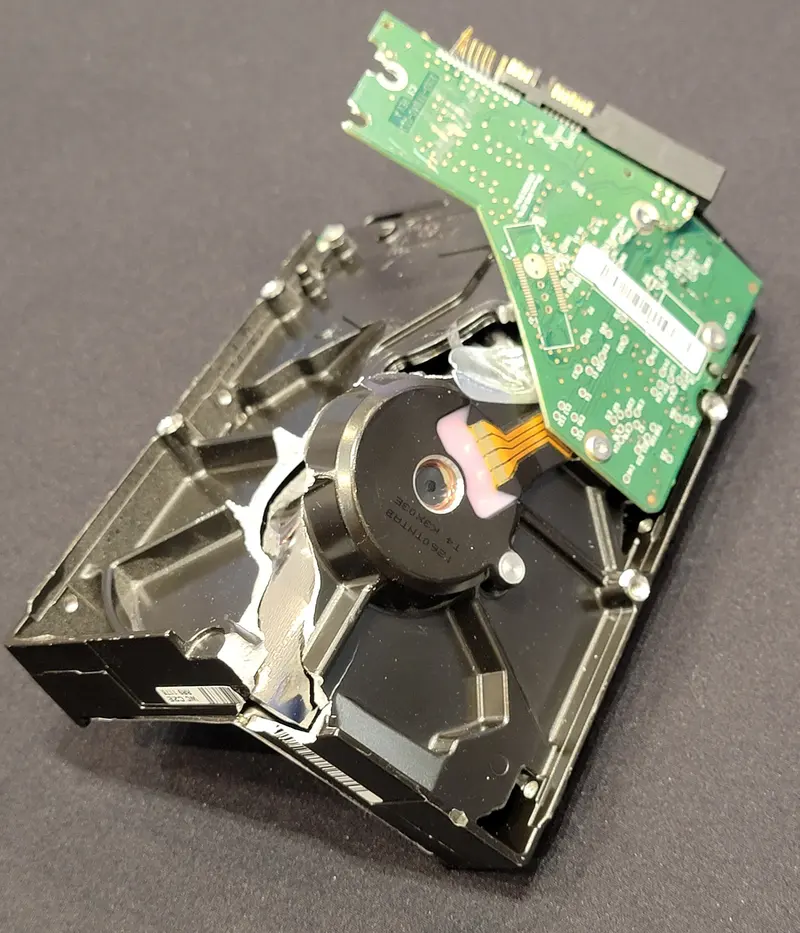
- Destruction means shredding or grinding to particles of 6mm or less, after erasing the device first, and checking the particle size.
- Degaussing only works on magnetic media, and the degausser has to suit the drive.
- Where data could remain, or the data is personal or carries extra handling caveats, the guidance leans towards physical destruction. The risk owner has to accept any risk that remains.
The guidance covers data at OFFICIAL. It says media holding SECRET or above needs separate guidance. Defence suppliers and others who handle classified material should follow the security requirements in their contract and check with their security controller before using a commercial disposal service.
Data wiping and destruction standards explained compares the main erasure and destruction standards you will see in suppliers' paperwork.
Certified providers: CAS-S has closed
For years, central government buyers looked for disposal companies certified under the NCSC's Sanitisation Assurance scheme (CAS-S). The NCSC says this scheme closed on 5 January 2026. Certificates already issued stay valid, and stay listed on the NCSC website, until they expire. The NCSC has launched Sanitisation Service Assurance delivered by the Cyber Resilience Test Facilities (CRTF) to replace it.
In practice, this means:
- a supplier quoting a CAS-S certificate should be able to show it on the NCSC website, with a date that hasn't passed
- new suppliers won't be able to get CAS-S. Ask instead about the new CRTF assurance, and about other certifications
- the NCSC guidance names ADISA certification as another recognised standard for disposal companies
On Green ITAD you can see which companies we have verified as ADISA certified, and which only say so themselves. Any certificate is worth checking at the source before you sign.
Buying routes
Public bodies usually have to follow procurement rules, so frameworks matter. Two that cover IT disposal:
- Technology Products & Associated Services 2 (RM6098), run by the Government Commercial Agency (GCA). Crown Commercial Service became GCA on 1 April 2026, so older documents may still say CCS. All UK public sector organisations can use it. Its Lot 7, Sustainability and Circular IT, "provides recycling and secure disposal services for software and hardware products", along with refurbished technology. GCA lists the agreement as running until 9 October 2027.
- Schools: the Department for Education's *Get help buying for schools* service lists an "IT, hardware, ITAD & associated services" agreement from Procurement Services. Its Lot 3 covers secure end-of-life disposal, and Lot 4 combines buying hardware with disposal. The DfE page says it expires on 13 November 2029.
A framework doesn't do the checking for you. You still need the contract terms, certificates and audit rights the ICO expects. You still need to meet your waste duties too.
Don't forget the waste law
Old IT is usually waste in law, even when some of it will be refurbished. Public bodies have the same duty of care as any business. You need a registered waste carrier, a waste transfer note (or a consignment note for hazardous items), and a destination that is allowed to accept the equipment. Electrical waste brings WEEE rules as well. See duty of care and waste transfer notes, WEEE rules when your business gets rid of IT and T11, ATF and AATF.
A short checklist
- Keep an asset register with serial numbers. Log devices as they are taken out of use, and store them securely.
- Decide the method for each type of device based on the data it held, following the NCSC guidance. Get your risk owner to sign off any risk that remains.
- Check the provider's certificates at the source: NCSC listing for CAS-S, the ADISA list, waste carrier and site permits on the regulators' registers.
- Put security, accountability and audit rights in the contract.
- Get per-device evidence back, such as erasure reports or destruction certificates, and have someone match it against your register.
- Keep the waste paperwork with the data paperwork.
For a fuller list of questions to ask, see choosing an ITAD provider. If you're clearing equipment at the end of the year, the office IT clear-out checklist may help too.
Companies in our directory that list these services:
- Data destruction449 companies
- Data erasure374 companies
- On-site shredding117 companies
- Data centre decommissioning88 companies
Sources
- ICO: Data protection audit framework — records management: disposal and deletion
- NCSC: Secure sanitisation and disposal of storage media
- NCSC: Sanitisation Assurance (CAS-S) scheme
- Government Commercial Agency: Technology Products & Associated Services 2 (RM6098)
- DfE Get help buying for schools: IT, hardware, ITAD & associated services
- Defra: Waste duty of care code of practice
- GOV.UK: Managing your waste — an overview
Checked 23 November 2026.
This article is general information, not legal advice. Rules differ between England, Wales, Scotland and Northern Ireland — check with the regulator or an adviser for your situation.