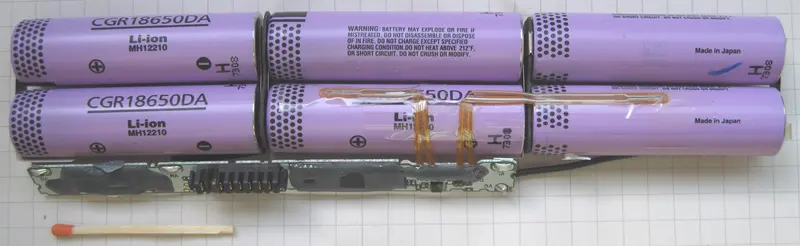
The weeks after Christmas are when a lot of small electricals get replaced: last year's earbuds, a broken string of fairy lights, a power bank that no longer holds its charge, an old phone. Almost all of them contain a battery — and a battery in the wrong bin is a fire risk.
The scale of the problem
Recycle Your Electricals, the national campaign that runs the UK's electrical recycling locator, says a battery fire now starts about every three hours in the UK, in a bin lorry or at a waste site. Its campaign page says more than 2,800 battery fires were reported across the UK in 2025, that these fires have more than doubled since 2024, and that they cost the UK at least £2.37 billion a year.
The reason is simple. When a lithium battery is crushed or punctured in the back of a lorry or in a sorting machine, it can short-circuit and catch fire, and the paper and plastic around it burn easily.
Where batteries hide
Recycle Your Electricals lists everyday items that hide batteries, including:
- fairy lights and light-up decorations
- earbuds and wireless headphones
- vapes
- electric toothbrushes
- mini fans and novelty toys
- musical greeting cards
- power banks
Its rule of thumb: if something lights up, buzzes, moves, shakes or puffs without being plugged in, or charges from a USB lead, it probably has a battery inside.
Old laptops, tablets and phones are the obvious ones, but at home it's the small, cheap, throwaway items that most often end up in the general rubbish.
What to do instead: A, B, C
The campaign's advice comes down to three steps:
- Ask whether the item has a battery. If the battery comes out easily, take it out and recycle it separately at a battery point.
- Bag it. Keep old electricals and loose batteries in their own bag or box until you can take them in.
- Check the Recycle Your Electricals locator for a drop-off point, or your council's collection if it offers one.
If the battery can't be removed — common in disposable vapes, mini fans and electric toothbrushes — don't force it out or take the item apart. Recycle the whole thing as it is.
Batteries, and anything containing them, should never go in the household rubbish or the mixed recycling bin.
Where they can go
- Household batteries (AA, AAA, button cells, rechargeables): many shops and supermarkets have battery bins.
- Bigger battery packs from laptops or power tools: your council's household waste and recycling centre, or an electrical retailer or large store that offers in-store take-back.
- Vapes: Recycle Your Electricals says shops that sell vapes must offer a take-back service, often free in store.
- Small electricals: larger electrical retailers (over 400 square metres of electrical sales space) must take back items under 25cm on their longest side free, even if you don't buy anything, unless they've joined the industry take-back scheme instead.
- Car batteries must not go in a rubbish bin; garages, scrap yards and many recycling centres take them.
If a battery is swollen, damaged or hot, the Recycle Your Electricals pages don't give specific advice — contact your council or the recycling point before taking it in.
For businesses: office clear-outs
Batteries are part of almost every IT collection: laptops, UPS units, phones, tablets, wireless keyboards and mice. When a company collects your old equipment, describe the load accurately on the waste transfer note — including that it contains batteries — so it's handled safely. The waste duty of care code of practice says waste should be stored in secure, labelled containers and described accurately when it's handed over. Our guide to WEEE rules for businesses explains how business electrical waste is handled.
Companies listed on Green ITAD that say they collect or take drop-offs:
- Free IT collection171 companies
- Collection439 companies
- Drop-off121 companies
- WEEE recycling258 companies
And if you're getting rid of an old phone or laptop at home, remember the data as well as the battery — see a new phone for Christmas? What to do with the old one.
Sources
- Recycle Your Electricals: Stop battery fires campaign
- Recycle Your Electricals: Recycling batteries
- Recycle Your Electricals: home page and recycling locator
- GOV.UK: Electrical waste — retailer and distributor responsibilities (take back waste in store)
- GOV.UK: Waste duty of care code of practice
Checked 22 November 2026.
This article is general information, not legal advice. Rules differ between England, Wales, Scotland and Northern Ireland — check with the regulator or an adviser for your situation.